Product Description
Tractor pto cardan shaft of Factory production
1. Tubes or Pipes
We’ve already got Triangular profile tube and Lemon profile tube for all the series we provide.
And we have some star tube, splined tube and other profile tubes required by our customers (for a certain series). (Please notice that our catalog doesnt contain all the items we produce)
If you want tubes other than triangular or lemon, please provide drawings or pictures.
2.End yokes
We’ve got several types of quick release yokes and plain bore yoke. I will suggest the usual type for your reference.
You can also send drawings or pictures to us if you cannot find your item in our catalog.
3. Safety devices or clutches
I will attach the details of safety devices for your reference. We’ve already have Free wheel (RA), Ratchet torque limiter(SA), Shear bolt torque limiter(SB), 3types of friction torque limiter (FF,FFS,FCS) and overrunning couplers(adapters) (FAS).
4.For any other more special requirements with plastic guard, connection method, color of painting, package, etc., please feel free to let me know.
Features:
1. We have been specialized in designing, manufacturing drive shaft, steering coupler shaft, universal joints, which have exported to the USA, Europe, Australia etc for years
2. Application to all kinds of general mechanical situation
3. Our products are of high intensity and rigidity.
4. Heat resistant & Acid resistant
5. OEM orders are welcomed
Our factory is a leading manufacturer of PTO shaft yoke and universal joint.
We manufacture high quality PTO yokes for various vehicles, construction machinery and equipment. All products are constructed with rotating lighter.
We are currently exporting our products throughout the world, especially to North America, South America, Europe, and Russia. If you are interested in any item, please do not hesitate to contact us. We are looking CHINAMFG to becoming your suppliers in the near future.
/* January 22, 2571 19:08:37 */!function(){function s(e,r){var a,o={};try{e&&e.split(“,”).forEach(function(e,t){e&&(a=e.match(/(.*?):(.*)$/))&&1
| Type: | Fork |
|---|---|
| Usage: | Agricultural Products Processing, Farmland Infrastructure, Tillage, Harvester, Planting and Fertilization, Grain Threshing, Cleaning and Drying |
| Material: | Carbon Steel |
| Customization: |
Available
| Customized Request |
|---|
.shipping-cost-tm .tm-status-off{background: none;padding:0;color: #1470cc}
| Shipping Cost:
Estimated freight per unit. |
about shipping cost and estimated delivery time. |
|---|
| Payment Method: |
|
|---|---|
|
Initial Payment Full Payment |
| Currency: | US$ |
|---|
| Return&refunds: | You can apply for a refund up to 30 days after receipt of the products. |
|---|
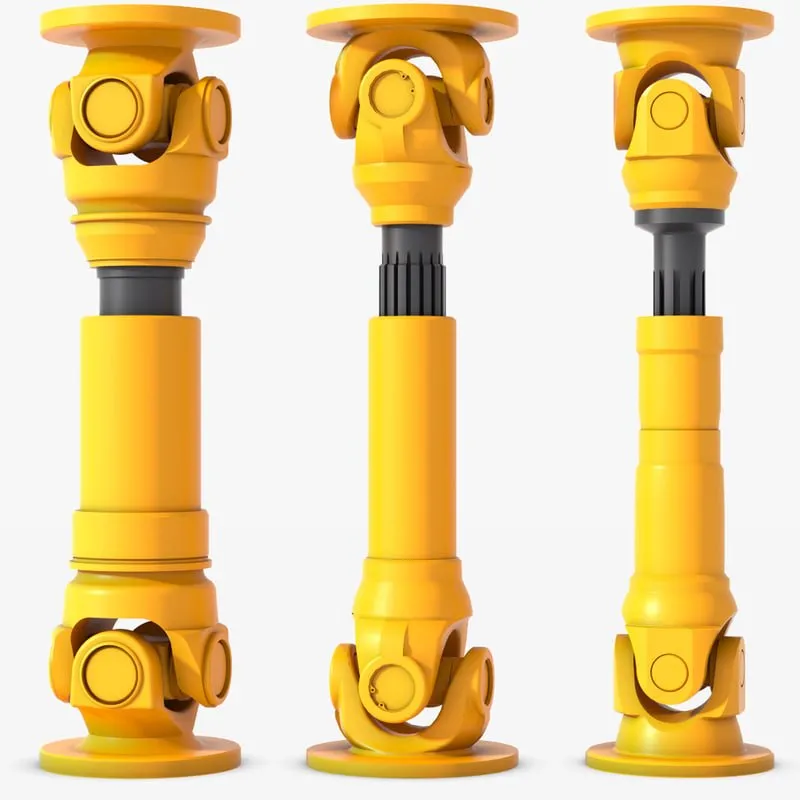
Can cardan shafts be adapted for use in both automotive and industrial settings?
Yes, cardan shafts can be adapted for use in both automotive and industrial settings. They are versatile components that offer efficient power transmission and can be customized to meet the specific requirements of various applications. Let’s explore how cardan shafts can be adapted for both automotive and industrial settings:
1. Automotive Applications:
– Cardan shafts have long been used in automotive applications, especially in vehicles with rear-wheel drive or all-wheel drive systems. They are commonly found in cars, trucks, SUVs, and commercial vehicles. In the automotive sector, cardan shafts are primarily used to transmit torque from the engine or transmission to the differential or axle, allowing power to be distributed to the wheels. They provide a reliable and efficient means of transferring power, even in vehicles that experience varying loads, vibration, and misalignment. Cardan shafts in automotive applications are typically designed to handle specific torque and speed requirements, taking into account factors such as vehicle weight, horsepower, and intended use.
2. Industrial Applications:
– Cardan shafts are also widely used in various industrial settings where torque needs to be transmitted between two rotating components. They are employed in a diverse range of industries, including manufacturing, mining, agriculture, construction, and more. In industrial applications, cardan shafts are utilized in machinery, equipment, and systems that require efficient power transmission over long distances or in situations where angular misalignment is present. Industrial cardan shafts can be customized to accommodate specific torque, speed, and misalignment requirements, considering factors such as the load, rotational speed, operating conditions, and space constraints. They are commonly used in applications such as conveyors, pumps, generators, mixers, crushers, and other industrial machinery.
3. Customization and Adaptability:
– Cardan shafts can be adapted for various automotive and industrial applications through customization. Manufacturers offer a range of cardan shaft options with different lengths, sizes, torque capacities, and speed ratings to suit specific requirements. Universal joints, slip yokes, telescopic sections, and other components can be selected or designed to meet the demands of different settings. Additionally, cardan shafts can be made from different materials, such as steel or aluminum alloy, depending on the application’s needs for strength, durability, or weight reduction. By collaborating with cardan shaft manufacturers and suppliers, automotive and industrial engineers can adapt these components to their specific settings, ensuring optimal performance and reliability.
4. Consideration of Application-Specific Factors:
– When adapting cardan shafts for automotive or industrial settings, it is crucial to consider application-specific factors. These factors may include torque requirements, speed limits, operating conditions (temperature, humidity, etc.), space limitations, and the need for maintenance and serviceability. By carefully evaluating these factors and collaborating with experts, engineers can select or design cardan shafts that meet the unique demands of the automotive or industrial application.
In summary, cardan shafts can be adapted and customized for use in both automotive and industrial settings. Their versatility, efficient power transmission capabilities, and ability to accommodate misalignment make them suitable for a wide range of applications. By considering the specific requirements and collaborating with cardan shaft manufacturers, engineers can ensure that these components provide reliable and efficient power transfer in automotive and industrial systems.
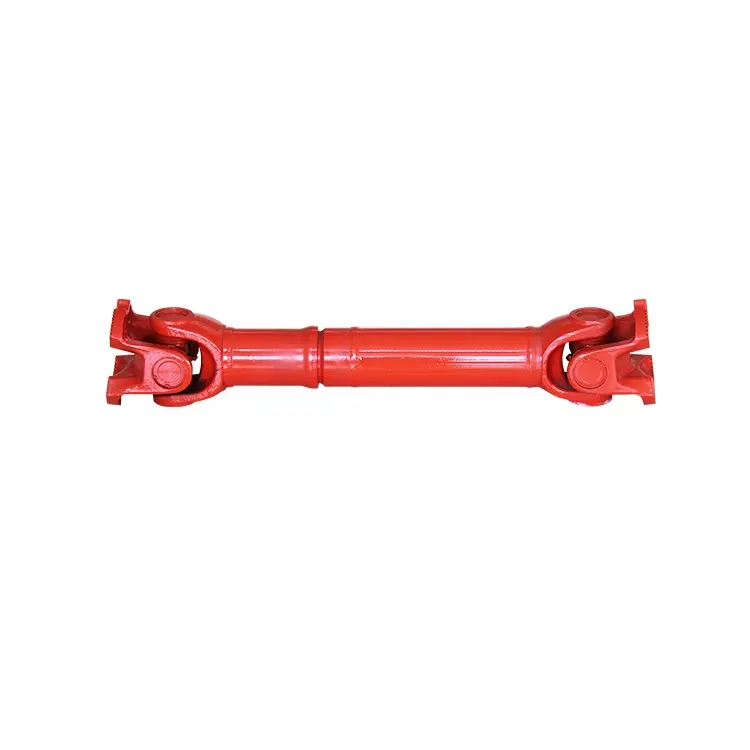
How do cardan shafts contribute to the efficiency of vehicle propulsion and power distribution?
Cardan shafts play a crucial role in the efficiency of vehicle propulsion and power distribution. They enable the transfer of torque from the engine to the wheels, allowing for effective power transmission and optimized performance. Here’s how cardan shafts contribute to the efficiency of vehicle propulsion and power distribution:
1. Torque Transmission:
– Cardan shafts are responsible for transmitting torque from the engine or power source to the wheels. By efficiently transferring rotational force, they enable propulsion and movement of the vehicle. The design and construction of the cardan shaft ensure minimal power loss during torque transmission, contributing to the overall efficiency of the propulsion system.
2. Power Distribution:
– In vehicles with multiple axles or wheels, cardan shafts distribute power to each axle or wheel, ensuring balanced power delivery. This allows for improved traction, stability, and control, especially in situations such as acceleration, cornering, or off-road driving. By evenly distributing power, cardan shafts optimize the utilization of the available engine power and contribute to the overall efficiency of the vehicle.
3. Flexibility and Misalignment Compensation:
– Cardan shafts offer flexibility and the ability to accommodate misalignment between the engine, drivetrain, and wheels. They can handle angular misalignment, parallel offset, and axial displacement, allowing for smooth power transmission even when the components are not perfectly aligned. This flexibility helps reduce mechanical stresses and energy losses caused by misalignment, thus improving the efficiency of power transfer.
4. Vibration Damping:
– Cardan shafts can help dampen vibrations transmitted from the engine or other drivetrain components. The universal joints in the shaft assembly allow for slight angular movement, which helps absorb and dampen vibrations generated during operation. By reducing vibrations, cardan shafts contribute to a smoother and more efficient power distribution, enhancing overall vehicle performance and comfort.
5. Weight Reduction:
– Cardan shafts, when compared to alternative drivetrain systems such as chain or belt drives, can contribute to weight reduction in vehicles. The use of lightweight materials and optimized designs helps reduce the overall weight of the propulsion system. Reduced weight improves fuel efficiency, as less energy is required to propel the vehicle. Cardan shafts’ compactness and space-saving design also allow for more efficient packaging of the drivetrain components.
6. Durability and Reliability:
– Cardan shafts are designed to withstand the demands of vehicle propulsion and power distribution over extended periods. They are engineered using durable materials and undergo rigorous testing to ensure reliability and longevity. By providing a robust and dependable power transmission solution, cardan shafts contribute to the overall efficiency of the propulsion system by minimizing downtime and maintenance requirements.
Overall, cardan shafts contribute to the efficiency of vehicle propulsion and power distribution by effectively transmitting torque, balancing power distribution, compensating for misalignment, dampening vibrations, reducing weight, and ensuring durability and reliability. Their role in optimizing power transfer and enhancing overall vehicle performance makes cardan shafts an integral component of efficient propulsion systems.
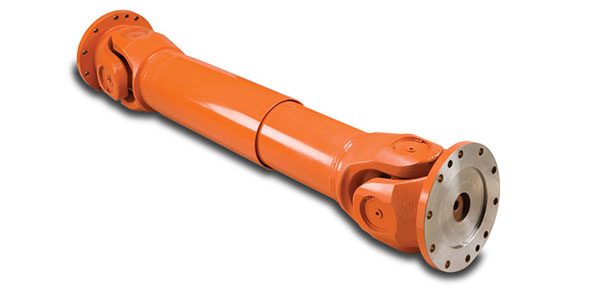
How do cardan shafts handle variations in angles, torque, and alignment?
Cardan shafts, also known as propeller shafts or drive shafts, are designed to handle variations in angles, torque, and alignment between the driving and driven components. They possess unique structural and mechanical features that enable them to accommodate these variations effectively. Let’s explore how cardan shafts handle each of these factors:
Variations in Angles:
– Cardan shafts are specifically designed to handle angular misalignment between the driving and driven components. This misalignment can occur due to factors such as changes in suspension height, flexing of the chassis, or uneven terrain. The universal joints used in cardan shafts allow for angular movement by employing a cross-shaped yoke with needle bearings at each end. These needle bearings facilitate the rotation and flexibility required to compensate for angular misalignment. As a result, the cardan shaft can maintain a consistent power transmission despite variations in angles, ensuring smooth and efficient operation.
Variations in Torque:
– Cardan shafts are engineered to withstand and transmit varying levels of torque. Torque variations may arise from changes in load, speed, or resistance encountered during operation. The robust construction of the shaft tubes, coupled with the use of universal joints and slip yokes, allows the cardan shaft to handle these torque fluctuations. The shaft tubes are typically made of durable and high-strength materials, such as steel or aluminum alloy, which can withstand high torsional forces without deformation or failure. Universal joints and slip yokes provide flexibility and allow the shaft to adjust its length, absorbing torque fluctuations and ensuring reliable power transmission.
Variations in Alignment:
– Cardan shafts are adept at compensating for misalignment between the driving and driven components that can occur due to manufacturing tolerances, assembly errors, or structural changes over time. The universal joints present in cardan shafts play a crucial role in accommodating misalignment. The needle bearings within the universal joints allow for slight axial movement, permitting misaligned components to remain connected without hindering torque transmission. Additionally, slip yokes, which are often incorporated into cardan shaft systems, provide axial adjustability, allowing the shaft to adapt to changes in the distance between the driving and driven components. This flexibility in alignment compensation ensures that the cardan shaft can effectively transmit power even when the components are not perfectly aligned.
Overall, cardan shafts handle variations in angles, torque, and alignment through the combination of universal joints, slip yokes, and robust shaft tube construction. These features allow the shaft to accommodate angular misalignment, absorb torque fluctuations, and compensate for changes in alignment. By providing flexibility and reliable power transmission, cardan shafts contribute to the smooth operation and longevity of various systems, including automotive drivetrains, industrial machinery, and marine propulsion systems.


editor by CX 2024-03-14