Solution Description
Improvement heritage for forging
2005:Forging company started to be built
2006: Forging and Machining function store was been developed
2012:New CNC Lathes have been utilised in Maching shop
2013:New 3T electro-hydraulic Hammer started to be employed
2015:New robotic forging line was mounted
We have 5 forging strains:3T electro-hydraulic Hammer,2500T Sizzling Die push,1600T Sizzling Die press,400T Double plate Friction press,300T Double plate Friction press
Main machining equipments:CNC Lathes,Painting line,Steady Warmth-remedy Line,well type Furnace,Reducing equipment,Robots
Major screening equipmentsOES Metals Analyzer,CMM,Universal hydrankic testing machine.
Innovate is the existence of firm.We go after the sustainable operation,specially the innovate.
We introduce the world’s foremost technologies blended with international high-tech expertise to guarantee the steady improvement of the company,and maintain extended-phrase competitive benefit.
We commit the 8% of zhe product sales quantity to be the R&D expenses
Forging items all undertake the worldwide authoritative top quality system certification and protection certificatio to make sure clients use goods with greater high quality and protection
Primary Creation Equipment Checklist
| No. | Forging Equipment | Type | Qty | Status | Note |
| 1 | Vertical lathe | VTC6070 | 36 | working | Finishing workshop |
| 2 | VMC | AVL-860 | 3 | working | Finishing workshop |
| 3 | VMC | VMC850B | 14 | working | Finishing workshop |
| 4 | Multi-function machine | HTC2050n | 20 | working | Finishing workshop |
| 5 | CAK | 5085di | 10 | working | Finishing workshop |
| 6 | Steyr CNC lathe | CK7520ACK50 | 8 6 | working | Finishing workshop |
| 7 | Milling and drilling machine | XZ8210C | 2 | working | Finishing workshop |
| 8 | CNC milling and drilling machine | TY-ZT5060 | 6 | working | Finishing workshop |
| 9 | OD milling machine | MB32BX500 | 2 | working | Finishing workshop |
| 10 | Air compressor | HLGD-75 | 1 | working | Finishing workshop |
| 11 | Vertical drilling machine | Z5140A | 6 | working | Finishing workshop |
| 12 | CNC suspended tapping machine | SKXFGS.PS | 5 | working | Finishing workshop |
| 13 | CNC hobbing machine | YK3180CNC3 | 6 | working | Finishing workshop |
| 14 | Marking machine | HZP-90*160D etc. | 6 | working | Finishing workshop |
| 15 | Natural gas furnace | WLS-DZ-001 etc. | 2 | working | Forging workshop |
| 16 | Air hammer | C41-2000 etc. | 15 | working | Forging workshop |
| 17 | Press | J53-2500C etc. | 18 | working | Forging workshop |
| 18 | Ring rolling machine | D51-450A etc. | 8 | working | Forging workshop |
| 19 | Electric furnace | KGPS-600KW etc. | 10 | working | Forging workshop |
| 20 | Compressor | 175A-20.5 etc. | 3 | working | Forging workshop |
| No. | Forging Equipment | Type | Qty | Status | Note |
| 1 | Vertical lathe | VTC6070 | 36 | working | Finishing workshop |
| 2 | VMC | AVL-860 | 3 | working | Finishing workshop |
| 3 | VMC | VMC850B | 14 | working | Finishing workshop |
| 4 | Multi-function machine | HTC2050n | 20 | working | Finishing workshop |
| 5 | CAK | 5085di | 10 | working | Finishing workshop |
| 6 | Steyr CNC lathe | CK7520ACK50 | 8 6 | working | Finishing workshop |
| 7 | Milling and drilling machine | XZ8210C | 2 | working | Finishing workshop |
| 8 | CNC milling and drilling machine | TY-ZT5060 | 6 | working | Finishing workshop |
| 9 | OD milling machine | MB32BX500 | 2 | working | Finishing workshop |
| 10 | Air compressor | HLGD-75 | 1 | working | Finishing workshop |
| 11 | Vertical drilling machine | Z5140A | 6 | working | Finishing workshop |
| 12 | CNC suspended tapping machine | SKXFGS.PS | 5 | working | Finishing workshop |
| 13 | CNC hobbing machine | YK3180CNC3 | 6 | working | Finishing workshop |
| 14 | Marking machine | HZP-90*160D etc. | 6 | working | Finishing workshop |
| 15 | Natural gas furnace | WLS-DZ-001 etc. | 2 | working | Forging workshop |
| 16 | Air hammer | C41-2000 etc. | 15 | working | Forging workshop |
| 17 | Press | J53-2500C etc. | 18 | working | Forging workshop |
| 18 | Ring rolling machine | D51-450A etc. | 8 | working | Forging workshop |
| 19 | Electric furnace | KGPS-600KW etc. | 10 | working | Forging workshop |
| 20 | Compressor | 175A-20.5 etc. | 3 | working | Forging workshop |
How to tell if your driveshaft needs replacing
What is the cause of the unbalanced drive shaft? Unstable U-joint? Your car may make clicking noises while driving. If you can hear it from both sides, it might be time to hand it over to the mechanic. If you’re not sure, read on to learn more. Fortunately, there are many ways to tell if your driveshaft needs replacing.
unbalanced
An unbalanced driveshaft can be the source of strange noises and vibrations in your vehicle. To fix this problem, you should contact a professional. You can try a number of things to fix it, including welding and adjusting the weight. The following are the most common methods. In addition to the methods above, you can use standardized weights to balance the driveshaft. These standardized weights are attached to the shaft by welders.
An unbalanced drive shaft typically produces lateral vibrations per revolution. This type of vibration is usually caused by a damaged shaft, missing counterweights, or a foreign object stuck on the drive shaft. On the other hand, torsional vibrations occur twice per revolution, and they are caused by shaft phase shifts. Finally, critical speed vibration occurs when the RPM of the drive shaft exceeds its rated capacity. If you suspect a driveshaft problem, check the following:
Manually adjusting the imbalance of a drive shaft is not the easiest task. To avoid the difficulty of manual balancing, you can choose to use standardized weights. These weights are fixed on the outer circumference of the drive shaft. The operator can manually position the weight on the shaft with special tools, or use a robot. However, manual balancers have many disadvantages.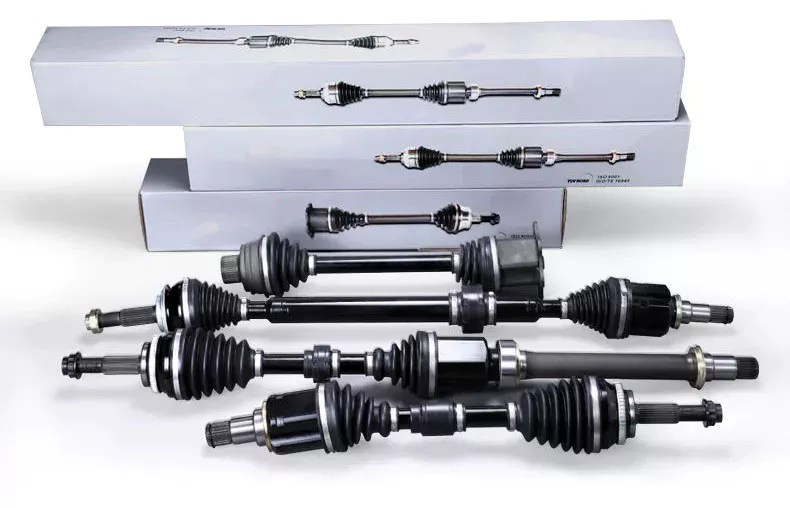
unstable
When the angular velocity of the output shaft is not constant, it is unstable. The angular velocity of the output shaft is 0.004 at ph = 29.5 and 1.9 at t = 1.9. The angular velocity of the intermediate shaft is not a problem. But when it’s unstable, the torque applied to it is too much for the machine. It might be a good idea to check the tension on the shaft.
An unstable drive shaft can cause a lot of noise and mechanical vibration. It can lead to premature shaft fatigue failure. CZPT studies the effect of shaft vibration on the rotor bearing system. They investigated the effect of flex coupling misalignment on the vibration of the rotor bearing system. They assume that the vibrational response has two components: x and y. However, this approach has limited application in many situations.
Experimental results show that the presence of cracks in the output shaft may mask the unbalanced excitation characteristics. For example, the presence of superharmonic peaks on the spectrum is characteristic of cracks. The presence of cracks in the output shaft masks unbalanced excitation characteristics that cannot be detected in the transient response of the input shaft. Figure 8 shows that the frequency of the rotor increases at critical speed and decreases as the shaft passes the natural frequency.
Unreliable
If you’re having trouble driving your car, chances are you’ve run into an unreliable driveshaft. This type of drivetrain can cause the wheels to stick or not turn at all, and also limit the overall control of the car. Whatever the reason, these issues should be resolved as soon as possible. Here are some symptoms to look for when diagnosing a driveshaft fault. Let’s take a closer look.
The first symptom you may notice is an unreliable drive shaft. You may feel vibrations, or hear noises under the vehicle. Depending on the cause, it could be a broken joint or a broken shaft. The good news is that driveshaft repairs are generally relatively inexpensive and take less time than a complete drivetrain replacement. If you’re not sure what to do, CZPT has a guide to replacing the U-connector.
One of the most common signs of an unreliable driveshaft is clanging and vibration. These sounds can be caused by worn bushings, loose U-joints, or damaged center bearings. This can cause severe vibration and noise. You can also feel these vibrations through the steering wheel or the floor. An unreliable driveshaft is a symptom of a bigger problem.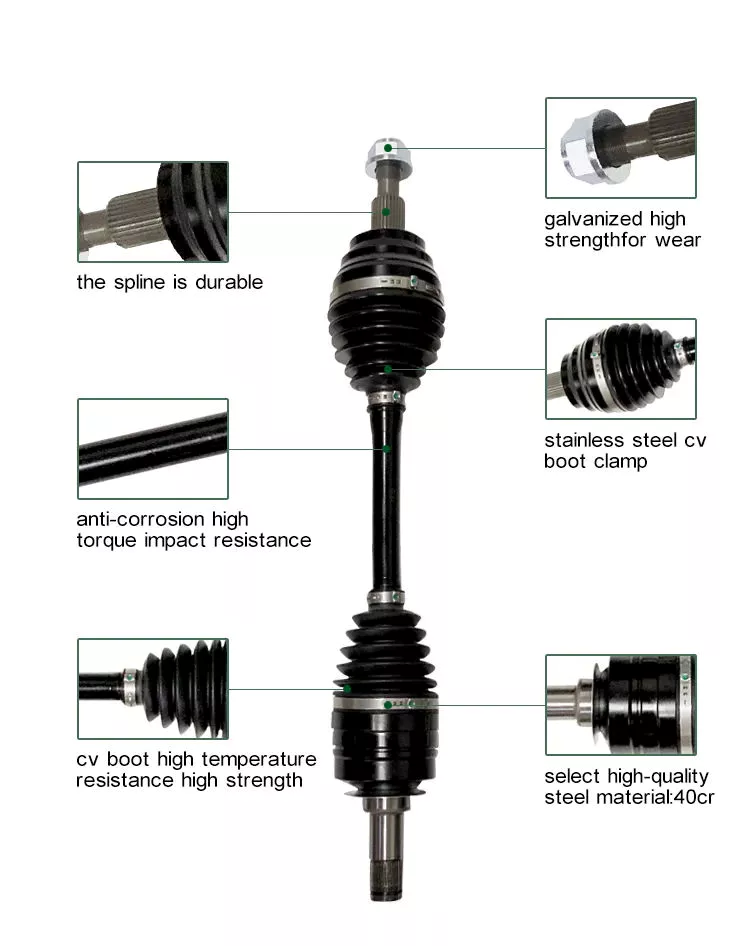
Unreliable U-joints
A car with an unreliable U-joint on the drive shaft can be dangerous. A bad u-joint can prevent the vehicle from driving properly and may even cause you trouble. Unreliable u-joints are cheap to replace and you should try getting parts from quality manufacturers. Unreliable U-joints can cause the car to vibrate in the chassis or gear lever. This is a sure sign that your car has been neglected in maintenance.
Replacing a U-joint is not a complicated task, but it requires special tools and a lot of elbow grease. If you don’t have the right tools, or you’re unfamiliar with mechanical terminology, it’s best to seek the help of a mechanic. A professional mechanic will be able to accurately assess the problem and propose an appropriate solution. But if you don’t feel confident enough, you can replace your own U-connector by following a few simple steps.
To ensure the vehicle’s driveshaft is not damaged, check the U-joint for wear and lubrication. If the U-joint is worn, the metal parts are likely to rub against each other, causing wear. The sooner a problem is diagnosed, the faster it can be resolved. Also, the longer you wait, the more you lose on repairs.
damaged drive shaft
The driveshaft is the part of the vehicle that connects the wheels. If the driveshaft is damaged, the wheels may stop turning and the vehicle may slow down or stop moving completely. It bears the weight of the car itself as well as the load on the road. So even a slight bend or break in the drive shaft can have dire consequences. Even a piece of loose metal can become a lethal missile if dropped from a vehicle.
If you hear a screeching noise or growl from your vehicle when shifting gears, your driveshaft may be damaged. When this happens, damage to the u-joint and excessive slack in the drive shaft can result. These conditions can further damage the drivetrain, including the front half. You should replace the driveshaft as soon as you notice any symptoms. After replacing the driveshaft, you can start looking for signs of wear.
A knocking sound is a sign of damage to the drive shaft. If you hear this sound while driving, it may be due to worn couplings, damaged propshaft bearings, or damaged U-joints. In some cases, the knocking noise can even be caused by a damaged U-joint. When this happens, you may need to replace the entire driveshaft, requiring a new one.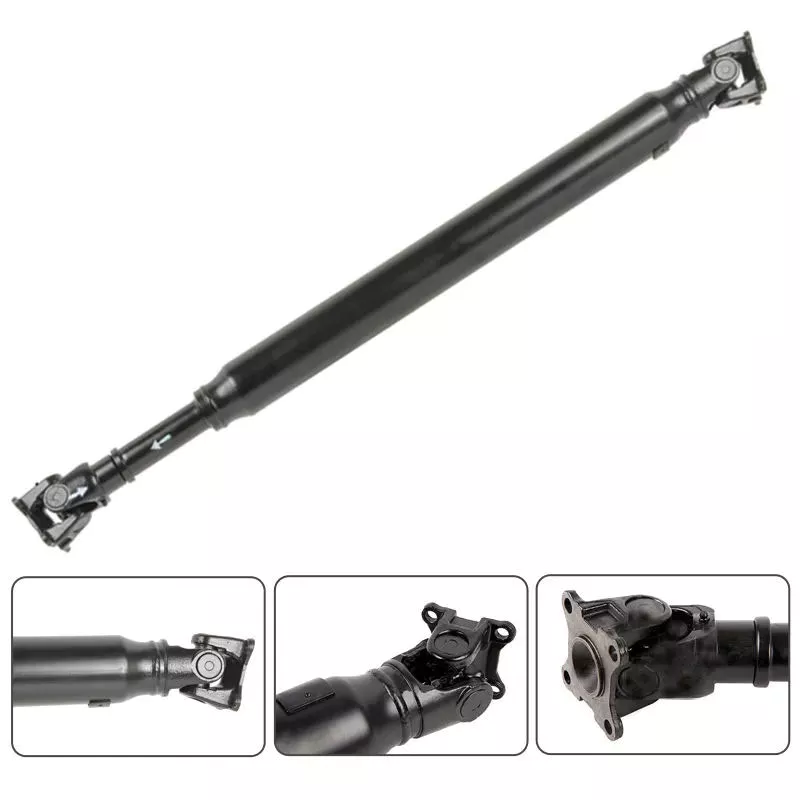
Maintenance fees
The cost of repairing a driveshaft varies widely, depending on the type and cause of the problem. A new driveshaft costs between $300 and $1,300, including labor. Repairing a damaged driveshaft can cost anywhere from $200 to $300, depending on the time required and the type of parts required. Symptoms of a damaged driveshaft include unresponsiveness, vibration, chassis noise and a stationary car.
The first thing to consider when estimating the cost of repairing a driveshaft is the type of vehicle you have. Some vehicles have more than one, and the parts used to make them may not be compatible with other cars. Even if the same car has two driveshafts, the damaged ones will cost more. Fortunately, many auto repair shops offer free quotes to repair damaged driveshafts, but be aware that such work can be complicated and expensive.