Description du produit
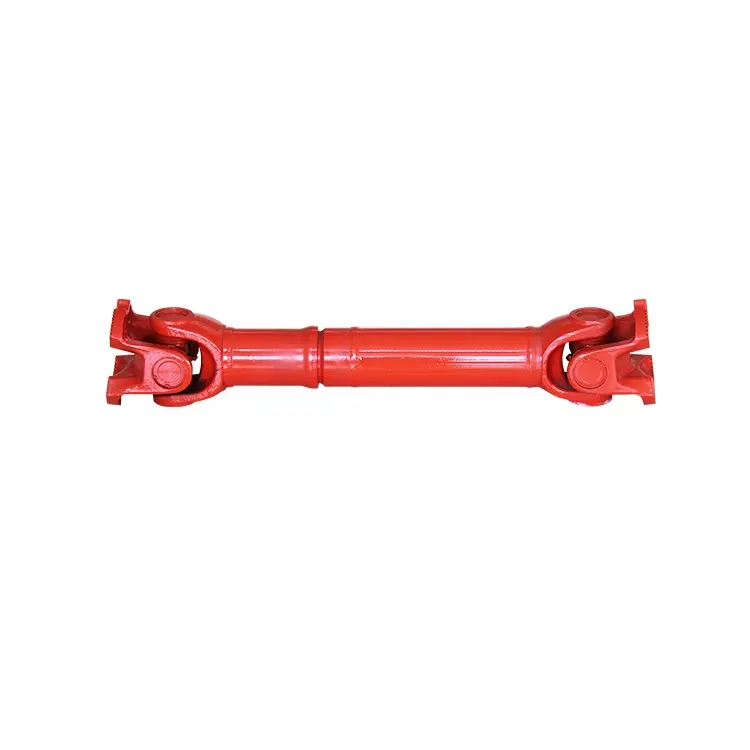
Transmission Shaft PTO Shaft for agricultural machine
Durable Transmission Shaft Made of aluminum alloy with excellent quality and carefully selected materials,the hot head greatly extends its service life.
Application Scope for PTO Shafts
Various types of agricultural machinery transmission shafts, with a wide range of product uses, which are mainly suitable for agricultural tractors,micro tillers,rotary tillers,seeders,fertilizer spreaders,lawn mowers,baling machines,grass bales and so on.
| Series | D(mm) | W(mm) | 540 | 1000 | ||||
| CV | KW | NM | CV | KW | NM | |||
| 1S | 22.0 | 54.0 | 16 | 12 | 210 | 25 | 18 | 172 |
| 2S | 23.8 | 61.3 | 21 | 15 | 270 | 31 | 23 | 220 |
| 3S | 27.0 | 70.0 | 30 | 22 | 390 | 47 | 35 | 330 |
| 4S | 27.0 | 74.6 | 35 | 26 | 460 | 55 | 40 | 380 |
| 5S | 30.2 | 80.0 | 47 | 35 | 620 | 74 | 54 | 520 |
| 6S | 30.2 | 92.0 | 64 | 47 | 830 | 100 | 74 | 710 |
| 7S | 30.2 | 106.5 | 75 | 55 | 970 | 118 | 87 | 830 |
| 8S | 35.0 | 106.5 | 95 | 70 | 1240 | 150 | 110 | 1050 |
| 9S | 41.0 | 108.0 | 120 | 88 | 1560 | 190 | 140 | 1340 |
Profil de l'entreprise
Shuoxin, Sure thing.
ZheJiang Shuoxin Machinery Manufacturing Co., Ltd has been in the agricultural machinery industry for more than 30 years, the product range covering spraying machines, fertilizer spreaders, manure spreaders, mowers, rakes, land levellers and so on. In the 30 years’ service for agriculture field, Shuoxin has grown into an enterprise that integrates multiple business modules such as Design, Manufacture, Service and Information Survey. Shuoxin agricultural machinery have done a important work to nutrition supply and plant diseases & insect pests control for crops such as wheat, cotton, corn, rice, orchards and vegetables. With the ISO System certificates and CE production certificates, Cooperating with Shuixin can guarantee the partners with advanced machine products, reduced labor cost, improved work efficiency and promoted product revenue.
Certifications
Product packaging
Iron Farme Packing
All the machines are fixed in the Iron Frame by steel wire, the Frame use the steel which is thicker than 3mm. Strong enough to carry and protect the machine.
Black plastic film will also protect the machine from rain and sun shine.
All the frames is welded according to the machine size, to make sure the minimum size and weight.
/* 22 janvier 2571 19:08:37 */!function(){function s(e,r){var a,o={};try{e&&e.split(“,”).forEach(function(e,t){e&&(a=e.match(/(.*?):(.*)$/))&&1
| Taper: | Shaft |
|---|---|
| Usage: | Tillage, Harvester, Planting and Fertilization |
| Matériel: | Fer |
| Power Source: | Tractor |
| Weight: | 6kg |
| Service après-vente : | Online Service |
| Personnalisation : |
Disponible
| Demande personnalisée |
|---|
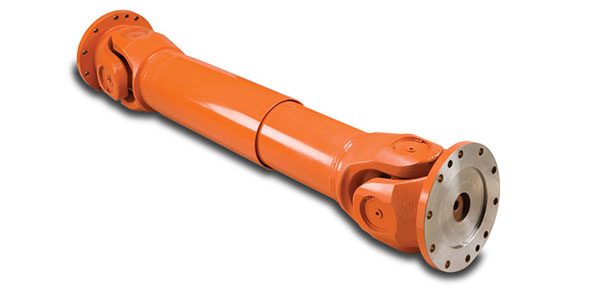
How do cardan shafts ensure efficient power transfer while maintaining balance?
Cardan shafts are designed to ensure efficient power transfer while maintaining balance between the driving and driven components. They employ various mechanisms and features that contribute to both aspects. Let’s explore how cardan shafts achieve efficient power transfer and balance:
1. Universal Joints:
– Cardan shafts utilize universal joints, also known as U-joints, to transmit torque from the driving component to the driven component. Universal joints consist of a cross-shaped yoke with needle bearings at each end. These needle bearings allow the joints to pivot and accommodate angular misalignment between the driving and driven components. By allowing for flexibility in movement, universal joints ensure efficient power transfer even when the components are not perfectly aligned, minimizing energy losses and maintaining balance.
2. Misalignment Compensation:
– Cardan shafts are designed to compensate for misalignment between the driving and driven components. The universal joints, along with slip yokes and telescopic sections, allow the shaft to adjust its length and accommodate variations in alignment. This misalignment compensation capability ensures that the cardan shaft can transmit power smoothly and efficiently, reducing stress on the components and maintaining balance during operation.
3. Balanced Design:
– Cardan shafts are engineered with a balanced design to minimize vibration and maintain smooth operation. The shaft tubes are typically symmetrically constructed, and the universal joints are positioned to distribute the mass evenly. This balanced design helps to reduce vibration and minimize the occurrence of unbalanced forces that can negatively impact power transfer and overall system performance. By maintaining balance, cardan shafts contribute to efficient power transmission and improve the lifespan of the components involved.
4. High-Quality Materials and Manufacturing:
– The materials used in the construction of cardan shafts, such as steel or aluminum alloy, are carefully selected for their strength, durability, and ability to maintain balance. High-quality materials ensure that the shafts can withstand the torque and operational stresses without deformation or failure, promoting efficient power transfer. Additionally, precise manufacturing processes and quality control measures are employed to ensure that the cardan shafts are accurately balanced during production, further enhancing their efficiency and balance.
5. Regular Maintenance and Inspection:
– To ensure continued efficient power transfer and balance, regular maintenance and inspection of cardan shafts are essential. This includes periodic lubrication of the universal joints, checking for wear or damage, and addressing any misalignment issues. Regular maintenance helps to preserve the balance of the shaft and ensures optimal performance and longevity.
Overall, cardan shafts ensure efficient power transfer while maintaining balance through the use of universal joints for torque transmission, misalignment compensation mechanisms, balanced design, high-quality materials, and regular maintenance. By incorporating these features, cardan shafts contribute to the smooth operation, reliability, and longevity of various applications in automotive, industrial, and other sectors that rely on efficient power transmission.
Comment les arbres de transmission à cardan gèrent-ils les variations de charge, de vitesse et de désalignement pendant leur fonctionnement ?
Les arbres de transmission à cardan sont conçus pour supporter les variations de charge, de vitesse et de désalignement en fonctionnement. Ils intègrent des caractéristiques et des mécanismes spécifiques pour s'adapter à ces facteurs et garantir une transmission de puissance efficace. Voyons comment les arbres de transmission à cardan gèrent ces variations :
1. Variation de charge :
Les arbres de transmission à cardan sont conçus pour transmettre le couple et supporter les variations de charge. Leur capacité de couple est déterminée en fonction des exigences de l'application, et ils sont fabriqués avec des matériaux et des dimensions adaptés aux charges spécifiées. La conception et la construction de l'arbre, notamment le choix des joints de cardan et des joints coulissants, sont optimisées pour supporter les charges prévues. Grâce à des matériaux et des dimensions appropriés, les arbres de transmission à cardan peuvent transmettre efficacement des charges variables sans rupture ni déformation excessive.
2. Variation de vitesse :
Les arbres de transmission à cardan peuvent compenser les variations de vitesse de rotation entre les composants menant et mené. Les joints de cardan, qui relient les segments de l'arbre, permettent un mouvement angulaire, compensant ainsi les différences de vitesse. La conception des joints de cardan et l'utilisation de roulements à aiguilles ou à rouleaux assurent une rotation fluide et une transmission de puissance efficace, même à des vitesses variables. Cependant, il est important de noter que des vitesses excessivement élevées peuvent engendrer des problèmes supplémentaires tels qu'une augmentation des vibrations et de l'usure, nécessitant parfois des mesures complémentaires comme l'équilibrage et la lubrification.
3. Compensation du désalignement :
Les arbres de transmission à cardan sont spécialement conçus pour compenser les défauts d'alignement entre les composants menant et mené. Ils peuvent accommoder, dans une certaine mesure, les défauts d'alignement angulaire, les décalages parallèles et les déplacements axiaux. Les joints de cardan de l'arbre lui confèrent flexibilité et articulation, lui permettant de transmettre le couple même lorsque les composants ne sont pas parfaitement alignés. La conception des joints de cardan, ainsi que leurs roulements et leurs joints d'étanchéité, assure une rotation fluide et la compensation des défauts d'alignement. Les fabricants spécifient les angles et les déplacements maximaux admissibles pour les arbres de transmission à cardan ; le dépassement de ces limites peut entraîner une usure accrue, des vibrations et une baisse de rendement.
4. Conception télescopique :
Les arbres de transmission à cardan sont souvent dotés d'une conception télescopique, permettant un mouvement axial et un réglage pour compenser les variations de distance entre les éléments menant et mené. Cette conception télescopique permet à l'arbre de s'adapter aux variations de longueur en cours de fonctionnement, par exemple lors des mouvements de la suspension du véhicule ou de l'équipement, ou lors des changements de position des composants de la transmission. Le mécanisme télescopique garantit un engagement et une connexion optimale de l'arbre, préservant ainsi l'efficacité de la transmission de puissance même en cas de fluctuations de distance ou de position.
5. Entretien régulier :
Pour garantir des performances optimales et une longue durée de vie, les arbres de transmission à cardan nécessitent un entretien régulier. Celui-ci comprend des inspections, la lubrification des joints de cardan et des joints coulissants, ainsi que la surveillance de l'usure et des dommages. Un entretien régulier permet d'identifier et de résoudre tout problème lié aux variations de charge, de vitesse ou de désalignement, assurant ainsi le bon fonctionnement de l'arbre quelles que soient les conditions d'utilisation.
De manière générale, les arbres de transmission à cardan supportent les variations de charge, de vitesse et de désalignement grâce à des caractéristiques de conception telles que les joints universels, la conception télescopique et la flexibilité. L'intégration de ces éléments, associée à un choix judicieux des matériaux, à une lubrification appropriée et à des pratiques d'entretien régulières, permet aux arbres de transmission à cardan de transmettre le couple de manière fiable et de s'adapter aux conditions de fonctionnement changeantes des véhicules et des équipements.
How do cardan shafts handle variations in angles, torque, and alignment?
Cardan shafts, also known as propeller shafts or drive shafts, are designed to handle variations in angles, torque, and alignment between the driving and driven components. They possess unique structural and mechanical features that enable them to accommodate these variations effectively. Let’s explore how cardan shafts handle each of these factors:
Variations in Angles:
– Cardan shafts are specifically designed to handle angular misalignment between the driving and driven components. This misalignment can occur due to factors such as changes in suspension height, flexing of the chassis, or uneven terrain. The universal joints used in cardan shafts allow for angular movement by employing a cross-shaped yoke with needle bearings at each end. These needle bearings facilitate the rotation and flexibility required to compensate for angular misalignment. As a result, the cardan shaft can maintain a consistent power transmission despite variations in angles, ensuring smooth and efficient operation.
Variations in Torque:
– Cardan shafts are engineered to withstand and transmit varying levels of torque. Torque variations may arise from changes in load, speed, or resistance encountered during operation. The robust construction of the shaft tubes, coupled with the use of universal joints and slip yokes, allows the cardan shaft to handle these torque fluctuations. The shaft tubes are typically made of durable and high-strength materials, such as steel or aluminum alloy, which can withstand high torsional forces without deformation or failure. Universal joints and slip yokes provide flexibility and allow the shaft to adjust its length, absorbing torque fluctuations and ensuring reliable power transmission.
Variations in Alignment:
– Cardan shafts are adept at compensating for misalignment between the driving and driven components that can occur due to manufacturing tolerances, assembly errors, or structural changes over time. The universal joints present in cardan shafts play a crucial role in accommodating misalignment. The needle bearings within the universal joints allow for slight axial movement, permitting misaligned components to remain connected without hindering torque transmission. Additionally, slip yokes, which are often incorporated into cardan shaft systems, provide axial adjustability, allowing the shaft to adapt to changes in the distance between the driving and driven components. This flexibility in alignment compensation ensures that the cardan shaft can effectively transmit power even when the components are not perfectly aligned.
Overall, cardan shafts handle variations in angles, torque, and alignment through the combination of universal joints, slip yokes, and robust shaft tube construction. These features allow the shaft to accommodate angular misalignment, absorb torque fluctuations, and compensate for changes in alignment. By providing flexibility and reliable power transmission, cardan shafts contribute to the smooth operation and longevity of various systems, including automotive drivetrains, industrial machinery, and marine propulsion systems.


editor by CX 2024-05-06