Product Description
HangZhou CHINAMFG Precision Industry Co.,Ltd
The company has owned IS0 9001 (International Quality Management) system certification, ISO14001 (International Environmental Management) system certification, IATF16949 (International Automotive Task Force) system certification and EN15085-2 (Railway applications-Welding of railway vehicles and components) system certification. We have an experienced management team and a group of high-quality talents.
Our advantages are as below.
- Core Value: Integrity + Quality;
- Rich Experience: Since the year of 2001;
- Technical Engineer: 36 Staffs;
- Quality Engineer: 18 Staffs;
- Company Certificate: ISO 9001, ISO14001, ITAF 16949, EN 15085-2;
- Strong Capacity: Up to 100k pieces per day;
| Factory Description and Service Content | ||||||||||||||||||||||
| PRODUCTION LINE: | Metal stamping, Laser cutting, Sheet metal, Welding, Spraying, Electrophoresis, Assembly. | |||||||||||||||||||||
| MATERIAL: | Carbon steel, Stainless steel, Aluminum, Copper, Brass, Bronze, Customized. | |||||||||||||||||||||
| PROCEDURES: | Blanking, Punching, Bending, Cutting, Milling, Dilling, Tapping, Riveting, Welding, Assembling, Packing. | |||||||||||||||||||||
| TOLERANCE: | +/- 0.01mm | |||||||||||||||||||||
| FINISH: | Powder, Spraying, Sand Blasting, Electroplating, Electrophoresis, Anodizing, Passivating, Customized. | |||||||||||||||||||||
| COLOR: | Natural, Conversonial, Silver, Grey, Black, White, Red, Blue, Green, Yellow, Matte, Glossy, Customized. | |||||||||||||||||||||
| SYSTEM CERTIFICATION: | ISO 9001, ISO 14001, ITAF 16949, EN 15085-2. | |||||||||||||||||||||
| APPLICATION: | Automobile, Communication, Electrical, Electronics, Rail transit, Equipment manufacturing etc. | |||||||||||||||||||||
| MOQ: | 1,000 Pcs ~ 5,000 Pcs | |||||||||||||||||||||
| MOULD COST: | 500 USD ~ 5,000 USD | |||||||||||||||||||||
| UNIT PRICE: | 0.05 USD ~ 5.00 USD | |||||||||||||||||||||
| PACKING: | Paper Bag, Plastic Bag, PE Bag, Carton Board, Carton Box, Plywood case, Wooden Case, Pallet. | |||||||||||||||||||||
| MPQ: | 50 Pcs ~ 200 Pcs | |||||||||||||||||||||
| LEAD TIME: | 15 Work Days ~ 25 Work Days | |||||||||||||||||||||
| TRADE TERM: | EXW, FOB, CFR, CIF, DDU, DDP. | |||||||||||||||||||||
| PAYMENT METHOD: | T/T, L/C, Western Union, Money Gram, PayPal, Ali Pay. | |||||||||||||||||||||
Workshop Inner View
System Certificate
Production Line View
Metalworking products are very important component in industrial field, It is widely accepted for its stable performance and affordable price.
Especially in the field of Automobile, Communication, Electrical, Electronics, IT, Equipment Manufacturing, Rail Transit and Construction etc.
We committed to provide our customers with excellent products and cater to their demand solutions with lower costs and highly efficiency. Please feel free to contact us, we are looking CHINAMFG to our further cooperation. We treat every customer sincerely and take every project seriously.
| FAQ:
1. Why business with CHINAMFG Precision Co., Ltd? 2. Are the products available for selling from your Product Display Area? 3. How to get your quotation? 4. What’s your production leadtime? 5. How to guarantee the products quality? |
/* January 22, 2571 19:08:37 */!function(){function s(e,r){var a,o={};try{e&&e.split(“,”).forEach(function(e,t){e&&(a=e.match(/(.*?):(.*)$/))&&1
| Material: | Stainless Steel Aluminum Carbon Steel Alloy Copper |
|---|---|
| Load: | Drive Shaft |
| Stiffness & Flexibility: | Stiffness / Rigid Axle |
| Journal Diameter Dimensional Accuracy: | IT6-IT9 |
| Axis Shape: | Straight Shaft |
| Shaft Shape: | Real Axis |
| Samples: |
US$ 1/Piece
1 Piece(Min.Order) | |
|---|
| Customization: |
Available
| Customized Request |
|---|
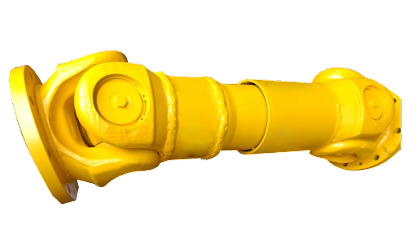
Are there any limitations or disadvantages associated with cardan shaft systems?
While cardan shaft systems offer numerous advantages, they also have some limitations and disadvantages that should be considered. Let’s explore these limitations in detail:
1. Angular Misalignment:
– Cardan shafts are designed to accommodate angular misalignment between the driving and driven components. However, excessive misalignment can lead to increased wear, vibration, and decreased efficiency. If the misalignment exceeds the recommended limits, it can put additional stress on the universal joints and other components, reducing the lifespan of the shaft and potentially causing mechanical failures.
2. Noise and Vibration:
– Cardan shaft systems can introduce noise and vibration into the equipment or vehicle. The universal joints and slip yokes in the shaft assembly can generate vibrations as they rotate, especially at high speeds. These vibrations can contribute to increased noise levels, potentially causing discomfort for passengers or affecting the performance of sensitive equipment. Proper balancing and maintenance of the shaft can help mitigate these effects, but they may still be present to some extent.
3. Maintenance and Lubrication:
– Cardan shaft systems require regular maintenance and lubrication to ensure optimal performance and longevity. The universal joints and slip yokes need to be properly lubricated to minimize friction and wear. If maintenance is neglected, the joints can wear out quickly, leading to increased vibration, noise, and potential failure. Regular inspections and lubrication are necessary to maintain the efficiency and reliability of cardan shaft systems.
4. Limited Flexibility in High-Speed Applications:
– Cardan shafts have limitations when it comes to high-speed applications. At high rotational speeds, the centrifugal forces acting on the rotating components can cause significant stress on the shaft and universal joints. This can result in increased wear, reduced lifespan, and potential failure. In such cases, alternative power transmission systems such as constant-velocity (CV) joints or direct drives may be more suitable.
5. Space and Weight Constraints:
– Cardan shaft systems require sufficient space for installation due to their length and telescopic design. In applications with limited space constraints, it may be challenging to accommodate the full length of the shaft, or modifications may be necessary to ensure proper fit. Additionally, the weight of the shaft can be a consideration, especially in applications where weight reduction is crucial. In such cases, alternative lightweight materials or drive systems may be more appropriate.
6. Cost:
– Cardan shaft systems can be relatively costly compared to other power transmission options. The complexity of their design, the need for customization, and the use of multiple components contribute to higher manufacturing and installation costs. However, it’s important to consider the overall benefits and performance of cardan shaft systems when evaluating their cost-effectiveness for specific applications.
7. Limited Misalignment Compensation:
– While cardan shafts can accommodate angular misalignment, they have limitations when it comes to compensating for other types of misalignment, such as parallel offset or axial displacement. In applications that require significant compensation for these types of misalignment, alternative power transmission systems with more advanced flexibility, such as flexible couplings or CV joints, may be more suitable.
Despite these limitations, cardan shaft systems remain widely used and offer numerous advantages in various applications. By understanding these limitations and considering the specific requirements of the application, engineers can make informed decisions regarding the suitability of cardan shaft systems or explore alternative power transmission options.
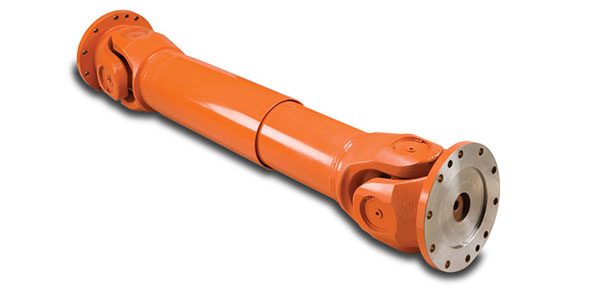
How do cardan shafts handle variations in load, speed, and misalignment during operation?
Cardan shafts are designed to handle variations in load, speed, and misalignment during operation. They incorporate specific features and mechanisms to accommodate these factors and ensure efficient power transmission. Let’s explore how cardan shafts handle these variations:
1. Load Variation:
– Cardan shafts are designed to transmit torque and handle variations in load. The torque capacity of the shaft is determined based on the application’s requirements, and the shaft is manufactured using materials and dimensions that can withstand the specified loads. The design and construction of the shaft, including the selection of universal joints and slip yokes, are optimized to handle the anticipated loads. By choosing appropriate material strengths and dimensions, cardan shafts can effectively transmit varying loads without failure or excessive deflection.
2. Speed Variation:
– Cardan shafts can accommodate variations in rotational speed between the driving and driven components. The universal joints, which connect the shaft’s segments, allow for angular movement, thereby compensating for speed differences. The design of the universal joints and the use of needle bearings or roller bearings enable smooth rotation and efficient power transmission even at varying speeds. However, it’s important to note that excessively high speeds can introduce additional challenges such as increased vibration and wear, which may require additional measures such as balancing and lubrication.
3. Misalignment Compensation:
– Cardan shafts are specifically designed to handle misalignment between the driving and driven components. They can accommodate angular misalignment, parallel offset, and axial displacement to a certain extent. The universal joints in the shaft assembly allow for flexibility and articulation, enabling the shaft to transmit torque even when the components are not perfectly aligned. The design of the universal joints, along with their bearing arrangements and seals, allows for smooth rotation and compensation of misalignment. Manufacturers specify the maximum allowable misalignment angles and displacements for cardan shafts, and exceeding these limits can lead to increased wear, vibration, and reduced efficiency.
4. Telescopic Design:
– Cardan shafts often feature a telescopic design, which allows for axial movement and adjustment to accommodate variations in distance between the driving and driven components. This telescopic design enables the shaft to handle changes in length during operation, such as when the vehicle or equipment undergoes suspension movement or when the drivetrain components experience positional changes. The telescopic mechanism ensures that the shaft remains properly connected and engaged, maintaining power transmission efficiency even when there are fluctuations in distance or position.
5. Regular Maintenance:
– To ensure optimal performance and longevity, cardan shafts require regular maintenance. This includes inspections, lubrication of universal joints and slip yokes, and monitoring for wear or damage. Regular maintenance helps identify and address any issues related to load, speed, or misalignment variations, ensuring that the shaft continues to function effectively under changing operating conditions.
Overall, cardan shafts handle variations in load, speed, and misalignment through their design features such as universal joints, telescopic design, and flexibility. By incorporating these elements, along with proper material selection, lubrication, and maintenance practices, cardan shafts can reliably transmit torque and accommodate the changing operating conditions in vehicles and equipment.
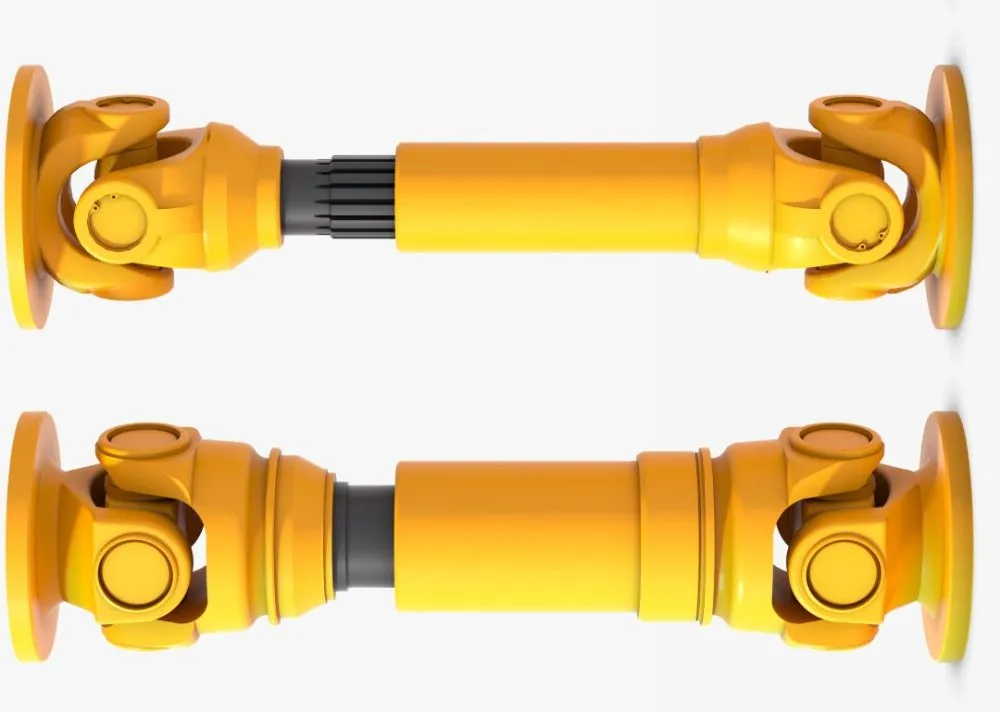
How do cardan shafts contribute to power transmission and motion in various applications?
Cardan shafts, also known as propeller shafts or drive shafts, play a significant role in power transmission and motion in various applications. They are widely used in automotive, industrial, and marine sectors to transfer torque and rotational power between non-aligned components. Cardan shafts offer several benefits that contribute to efficient power transmission and enable smooth motion in different applications. Here’s a detailed look at how cardan shafts contribute to power transmission and motion:
1. Torque Transmission:
– Cardan shafts are designed to transmit torque from a driving source, such as an engine or motor, to a driven component, such as wheels, propellers, or machinery. They can handle high torque loads and transfer power over long distances. By connecting the driving and driven components, cardan shafts ensure the efficient transmission of rotational power, enabling the motion of vehicles, machinery, or equipment.
2. Angular Misalignment Compensation:
– One of the key advantages of cardan shafts is their ability to accommodate angular misalignment between the driving and driven components. The universal joints present in cardan shafts allow for flexibility and articulation, compensating for variations in the relative positions of the components. This flexibility is crucial in applications where the driving and driven components may not be perfectly aligned, such as vehicles with suspension movement or machinery with adjustable parts. The cardan shaft’s universal joints enable the transmission of torque even when there are angular deviations, ensuring smooth power transfer.
3. Axial Misalignment Compensation:
– In addition to angular misalignment compensation, cardan shafts can also accommodate axial misalignment between the driving and driven components. Axial misalignment refers to the displacement along the axis of the shafts. The design of cardan shafts with telescopic sections or sliding splines allows for axial movement, enabling the shaft to adjust its length to compensate for variations in the distance between the components. This feature is particularly useful in applications where the distance between the driving and driven components can change, such as vehicles with adjustable wheelbases or machinery with variable attachment points.
4. Vibration Damping:
– Cardan shafts contribute to vibration damping in various applications. The flexibility provided by the universal joints helps absorb and dampen vibrations generated during operation. By allowing slight angular deflection and accommodating misalignment, cardan shafts help reduce the transmission of vibrations from the driving source to the driven component. This vibration damping feature improves the overall smoothness of operation, enhances ride comfort in vehicles, and reduces stress on machinery.
5. Balancing:
– To ensure smooth and efficient operation, cardan shafts are carefully balanced. Even minor imbalances in rotational components can result in vibration, noise, and reduced performance. Balancing the cardan shaft minimizes these issues by redistributing mass along the shaft, eliminating or minimizing vibrations caused by centrifugal forces. Proper balancing improves the overall stability, reduces wear on bearings and other components, and extends the lifespan of the shaft and associated equipment.
6. Safety Features:
– Cardan shafts often incorporate safety features to protect against mechanical failures. For example, some cardan shafts have guards or shielding to prevent contact with rotating components, reducing the risk of accidents or injuries. In applications where excessive forces or torques can occur, cardan shafts may include safety mechanisms such as shear pins or torque limiters. These features are designed to protect the shaft and other components from damage by shearing or disengaging in case of overload or excessive torque.
7. Versatility in Applications:
– Cardan shafts offer versatility in their applications. They are widely used in various industries, including automotive, agriculture, mining, marine, and industrial sectors. In automotive applications, cardan shafts transmit power from the engine to the wheels, enabling vehicle propulsion. In industrial machinery, they transfer power between motors and driven components such as conveyors, pumps, or generators. In marine applications, cardan shafts transmit power from the engine to propellers, enabling ship propulsion. The versatility of cardan shafts makes them suitable for a wide range of power transmission needs in different environments.
In summary, cardan shafts are essential components that contribute to efficient power transmission and motion in various applications. Their ability to accommodate angular and axial misalignment, dampen vibrations, balance rotational components, and incorporate safety features enables smooth and reliable operation in vehicles, machinery, and equipment. The versatility of cardan shafts makes them a valuable solution for transmitting torque and rotational power in diverse industries and environments.


editor by CX 2024-04-19